Need Emergency Fuel Delivery?
  info@elanfuels.com
Key Takeaways
- Propane vs gas generator trade-offs depend on fuel storage, runtime, cold-start behavior, and availability.
- For price stability and shelf life, propane or gasoline generator decisions often favor propane while for maximum watts per dollar, gas generators tend to win.
- Dual-fuel units let you switch between propane or gasoline during shortages, boosting resilience for homes and RVs.
- Real-world “best” depends on load profile, climate, and constraints
Table of Contents
Propane Vs. Gas Generator
The propane vs gas generator choice comes down to your priorities. You have to decide whether to prioritize runtime, storage lifetime, emissions, safety and cost per kWh. In most everyday scenarios, gas generators offer energy per gallon of fuel and better surge output while propane generators have longer shelf-life and lower emissions. It is also possible for you to run a dual-fuel model where you can switch between a gasoline generator and propane generator. The table below shows the trade-offs to consider when you have to make a propane vs gas generator decision.
| Factor | Propane vs gas generators | Why it matters |
|---|---|---|
| Energy density per gallon | Gasoline is more energy dense per gallon. | At heavy loads, gasoline delivers more surge and more runtime than propane. |
| Shelf life | Propane can stay on the shelf for years while gasoline typically last in storage from 6-12 months and needs stabilizers to be extended to 18 months | In emergencies propane generators can easily be fueled or refueled |
| Cold starts | Gasoline generators are more prone to slow starts in winter. Unlike propane generators that maintain their performance in cold weather | Propane, due to its very low freezing point, is more reliable and usable in winter. |
| Emissions/odor | Propane is cleaner and has less odor | Propane offers better air quality and comfort than gasoline. |
| Maintenance | Propane leaves fewer deposits. | Propane generators require fewer clean outs and so require less maintenance |
| Availability | Gasoline is more readily available, propane availability varies | When taking short trips, it is important to have knowledge of where you can find fuel, especially propane which is rare |
| Safety handling | Cylinders for gasoline have to stay sealed if not it evaporates. | Understanding safety helps to control risks when handling |
| Cost per KWh | Propane usually cost more per KWh | Important to note for the purpose of budgeting |
Is It Cheaper To Run A Generator On Gas Or Propane?
In the conversation of gasoline vs propane generators, pure fuel math will favor gasoline as it carries more energy per gallon and is mostly priced lower per kWh at medium-high loads. However, when you look at the bigger picture , you can see that due to propane’s stability, waste and need for maintenance are fewer. So light or intermittent users find propane generators to be more advantageous over certain periods. If power cuts at few but urgent, the math begins to favour propane for its long shelf-life and low maintenance requirements.
But if you run generators daily, gasoline vs propane generators goes the way of gasoline because it is readily available and will eventually save running cost.
Propane Or Gas, which Actually Saves You More?
Fuel costs, runtime, and maintenance vary by load and local prices. Use real numbers: energy per gallon, expected load %, and cylinder/can logistics to compute true cost per kWh, then switch fuels on your dual-fuel unit when it benefits you most.
What Lasts Longer On A Generator, Gas Or Propane?
On a per tank basis, gasoline usually runs longer because of its high energy output. Yet, over months of storage, propane is a better alternative as propane difficulty oxidizes and will take longer to get clogged jets. If your generator sits idle between seasonal storms propane is a safer option for instant situations. If you think beyond the tank size, multiple 20lb cylinders will give the portable propane generator users an advantage as they can refill their generators without handling liquid fuel. For daily, high demand operations, gasoline still delivers more runtime per refill.
Also, in colder weather, keeping storage tanks for gasoline will require more caution as it runs the risk of crystallizing rapidly
Does A Generator Run Quieter On Propane?
Fuel choice influences tone more than volume. Some people perceive propane generator operations as “softer,” thanks to cleaner combustion, but muffler design and load dominate acoustics.
For low-noise goals, inverter technology matters most, so the decision for gas or propane generators will be based on availability and cost. Still, reduced fumes make propane or gasoline generators more comfortable near tents, windows, or RV bays. If quiet hours are strict, verify decibel ratings at 25% and 50% loads, and consider how gasoline vs propane generator torque curves affect engine speed under varying demand.

Which Is Safer, A Gas Or Propane Generator?
Both fuels demand strict outdoor-only operation to prevent CO poisoning and also due to their high flammability. Propane cylinders are sealed and reduce spill risk, a common argument in propane generator vs gas generator safety debates.
Whichever you choose between gas or propane generator, make sure to use CO alarms, keep the unit dry, run cords rated for outdoor loads, and never back-feed without a transfer switch. For apartments or shared garages, the sealed nature of cylinders makes propane storage a more attractive option, but cylinders must remain outdoors and upright.
What Are The Downsides Of A Propane Generator?
A propane generator vs gasoline unit may produce slightly less peak wattage and require regulators and hoses that add complexity. Cylinder refills are location-dependent, and sudden high-surge loads (deep-well pumps, large compressors) can expose the derating associated with propane, nudging buyers toward gasoline generators as preferred options for their homes. If convenience means topping off a jerrycan at any corner station, a propane generator might feel limiting; if cleanliness and shelf life matter more, the trade-off is often worth it.
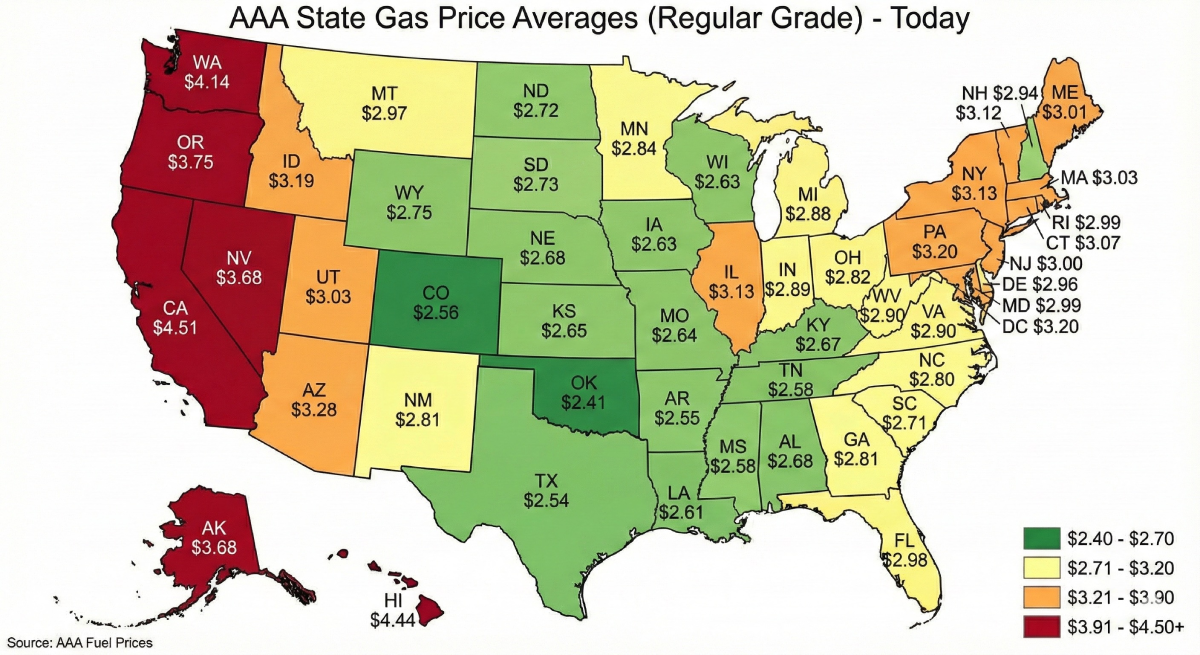
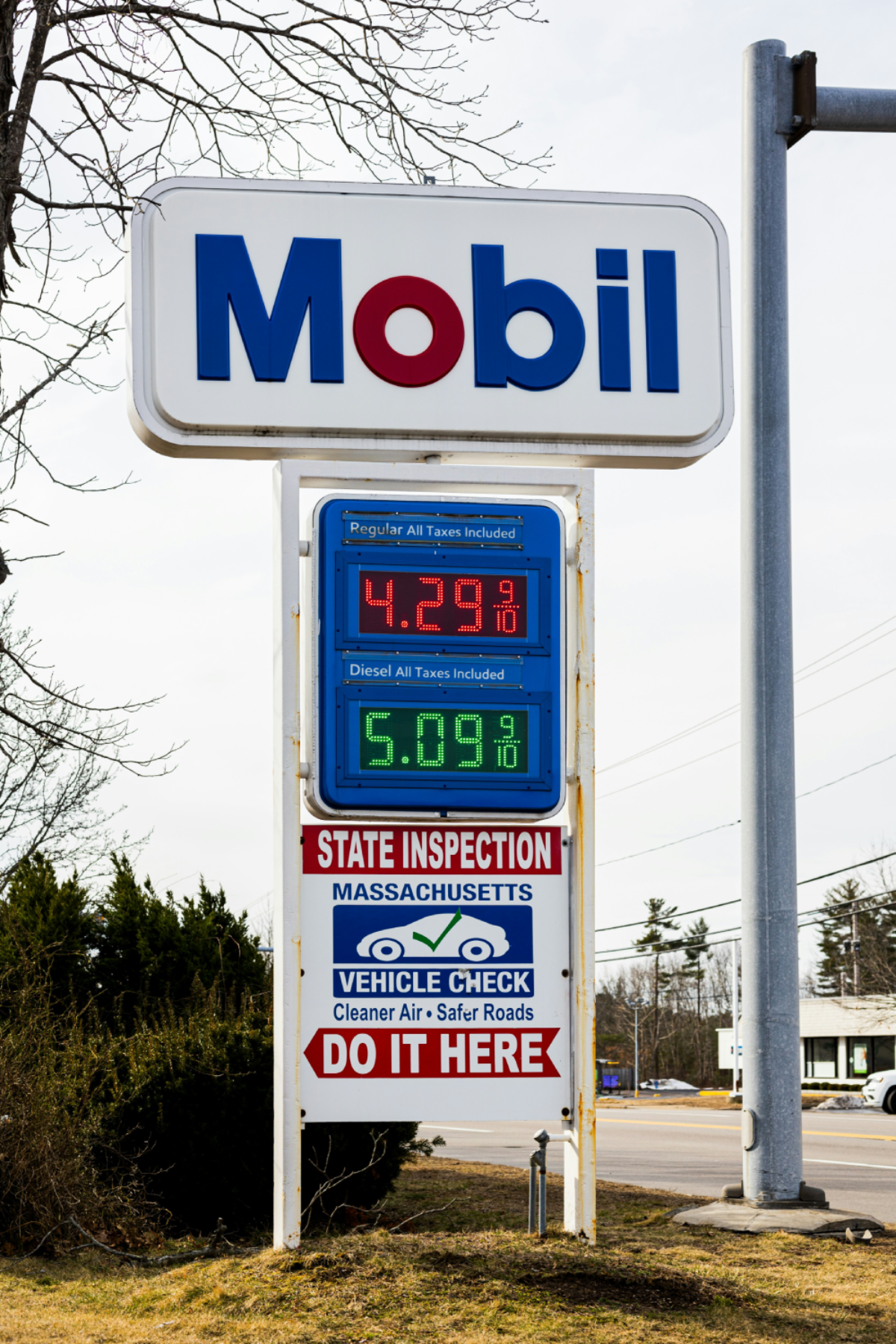
In terms of cost and availability, propane vs gas generators goes in favour of gasoline, as the average price per gallon of propane in the USA is $3.444 and the average price per gallon of gasoline in the USA is
Be Outage-Ready With A Smart Dual-Fuel Plan
Propane stores for years and cold-starts easily; gasoline delivers stronger surge and longer runtime at heavy loads. Keep spare 20-lb cylinders for instant starts, burn gas on long runs, and map your inventory for multi-day storms.
Does A Generator Run Better On Natural Gas Or Propane?
Natural gas (NG) is unmatched for convenience on permanently installed sets, but it carries lower energy content per volume and may reduce nameplate output. Portable dual-fuel owners usually stick with propane and gasoline generators rather than retrofitting for NG. If you have a meter and prioritize infinite runtime, NG is compelling; if you want mobility and flexible fueling, generator propane and gasoline generators remain the practical pair.
Local codes and proper regulators are mandatory for NG; for portables, keep propane or gas generator logistics simple and safe.
Propane is cleaner when operated and produces low residue, so it requires less maintenance.
Are Propane Generators Less Maintenance?
Propane’s clean burn means fewer deposits, less varnish, and often longer intervals between carb cleanouts than heavy gasoline vs propane generators use. Oil changes and filter checks still apply, but seasonal users appreciate pulling a starter cord without stale-fuel drama. If you dislike fuel rotation and stabilizers, propane or gas generator choices often tilt toward propane for simplicity; high-hour contractors may still prefer gasoline where generator gasoline vs propane economics dominate.
Cut Generator Maintenance & Fume Headaches
Propane’s cleaner burn means fewer deposits and less carb trouble, while inverter models keep noise down. For intermittent use, lean propane; for daily heavy loads, run gasoline, log hours and refills to fine-tune your strategy.
Advantages Of Gas Generators
Propane’s clean burn means fewer deposits, less varnish, and often longer intervals between carb cleanouts than is the case with heavy gasoline use.
Oil changes and filter checks still apply, but seasonal users appreciate pulling a starter cord without stale-fuel drama. If you dislike fuel rotation and stabilizers, propane vs gas generator choices often tilt toward propane for simplicity. High-hour contractors may still prefer gasoline where generator gasoline economics dominate propane economics.
Pairing a gas generator with accessories, transfer switches, heavy-duty cords, fuel stabilizers, and weatherproof covers maximizes performance and safety. These essentials simplify refueling, protect equipment, and ensure reliability. A bundled gas generator delivers convenience, efficiency, and peace of mind during outages or demanding job site use.
Propane Vs. Gas Generators With Dual Fuel Technology
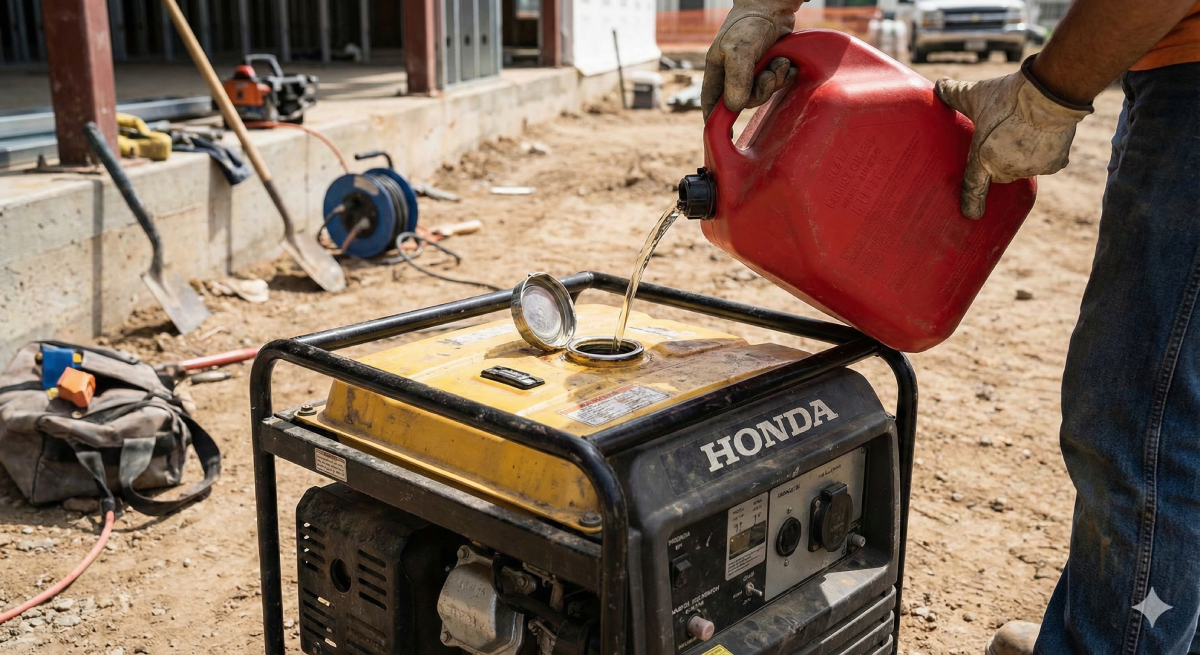
Dual fuel generators are designed to operate on both gasoline and propane, allowing users to switch between fuels with a simple adjustment. Internally, these units feature a specialized carburetion system that accommodates either fuel type, ensuring consistent performance regardless of the source.
The key advantage is flexibility in emergencies. If gasoline supplies run short during natural disasters or propane refilling stations are closed, you can easily switch to whichever fuel is available. This dual option ensures your generator remains operational when you need it most.
For travelers, adaptability is very important. Propane cylinders are ideal for RV trips and camping, while gasoline is available at nearly every station. At home, propane offers clean storage for backup readiness, while gas delivers higher energy density for longer runtimes. On job sites, having both fuels available ensures uninterrupted power, combining convenience with critical reliability.
Propane Vs. Gas Generator For Your RV
When deciding between propane vs gas generator options for RV use, travel comfort and convenience are often top priorities. Propane offers a cleaner burn with reduced exhaust fumes, making it more pleasant when parked in campgrounds or off-grid camping sites close to other travelers. Its quieter, steadier combustion can enhance nighttime comfort, particularly in crowded areas. Gasoline, on the other hand, generally provides more raw power and longer runtime per gallon, which is useful for heavy loads like air conditioning units.
Refueling is another important factor. Gasoline is widely available at nearly every station along the road, making gas generators appealing for continuous travel. Propane requires refill stations or tank exchanges, which may be harder to find in remote regions, but cylinders are easy to store and swap once located.
Storage limitations also play a role. Propane tanks must remain upright and outdoors, limiting flexibility inside RV compartments, though they are safer and longer-lasting than gasoline. Gasoline can be stored in cans, but it degrades quickly and carries stronger odors. Ultimately, a dual-fuel generator allows RV users to enjoy the convenience of gasoline’s availability and the cleaner, longer shelf life of propane, offering the best balance for travel.
How To Calculate How Much Propane Is Needed To Run A Dual-Fuel Generator
| Step | What to do | Example for portable propane in dual fuel generator |
|---|---|---|
| 1 | Note rated/continuous watts. Estimate load percentage | 3500W/3000W running at approximately 50% load |
| 2 | Convert to kWh per hour of runtime | Approximately 1.5 kWh per hour at 50% load |
| 3 | Estimate propane use(lb/hr) for your model | Typically 0.8-1.2lb/hr at 50% load |
| 4 | Map cylinders to hours | One 20 lb tank is approximately 16-20 hours at light loads |
| 5 | Add contingency | Carry 25-50% extra for cold propane vs gasoline conditions |