Need Emergency Fuel Delivery?
  info@elanfuels.com
Key Takeaways
- Water is heavier than diesel for the same volume because water has a higher density.
- Diesel typically floats on water, while water sinks and forms a bottom layer.
- Diesel weight per gallon varies slightly with temperature and formulation.
- Even small water contamination can lead to corrosion and fuel system problems.
- Water separating filters and good handling practices reduce risk.
Table of Contents
Is Water Heavier Than Diesel?
The question, is water heavier than diesel, is answerable through a volume comparison. When comparing one gallon of each, water consistently weighs more than diesel. This explains why water is heavier than diesel fuel is a relevant issue in contexts involving fuel storage and engines. Water’s higher density means it settles beneath the diesel, leading to common observations of water pooling in the bottom of tanks and filter bowls.
The practical concern is that water in diesel causes tank rust, encourages microbial growth, clogs filters, and damages injectors, resulting in poor engine operation. This contamination often enters through condensation, delivery issues, or inadequate sealing. Density is the governing principle, as water’s greater mass per volume causes it to separate and sink, which is critical knowledge for proper fuel maintenance.
How Density Determines Whether Water Or Diesel Is Heavier?
To compare diesel and water accurately, equal volumes should be compared using density values. Water’s density is approximately one kilogram per litre at standard conditions. Diesel fuel is less dense, typically ranging from 0.82KG to 0.86KG per liter, depending on its grade and temperature. Therefore, the answer to is heavier than water is generally no, and the answer to is lighter than water is generally yes for standard diesel fuel. Consequently, is diesel fuel heavier than water is generally not true.
A common misconception is to judge by how thick a liquid looks. Visual thickness does not reliably tell you weight. A liquid can look oily and still be lighter than water. Diesel can look darker and feel slick, but it is still less dense than water.
Seeing Water In Your Diesel Tank Or Filter Bowl?
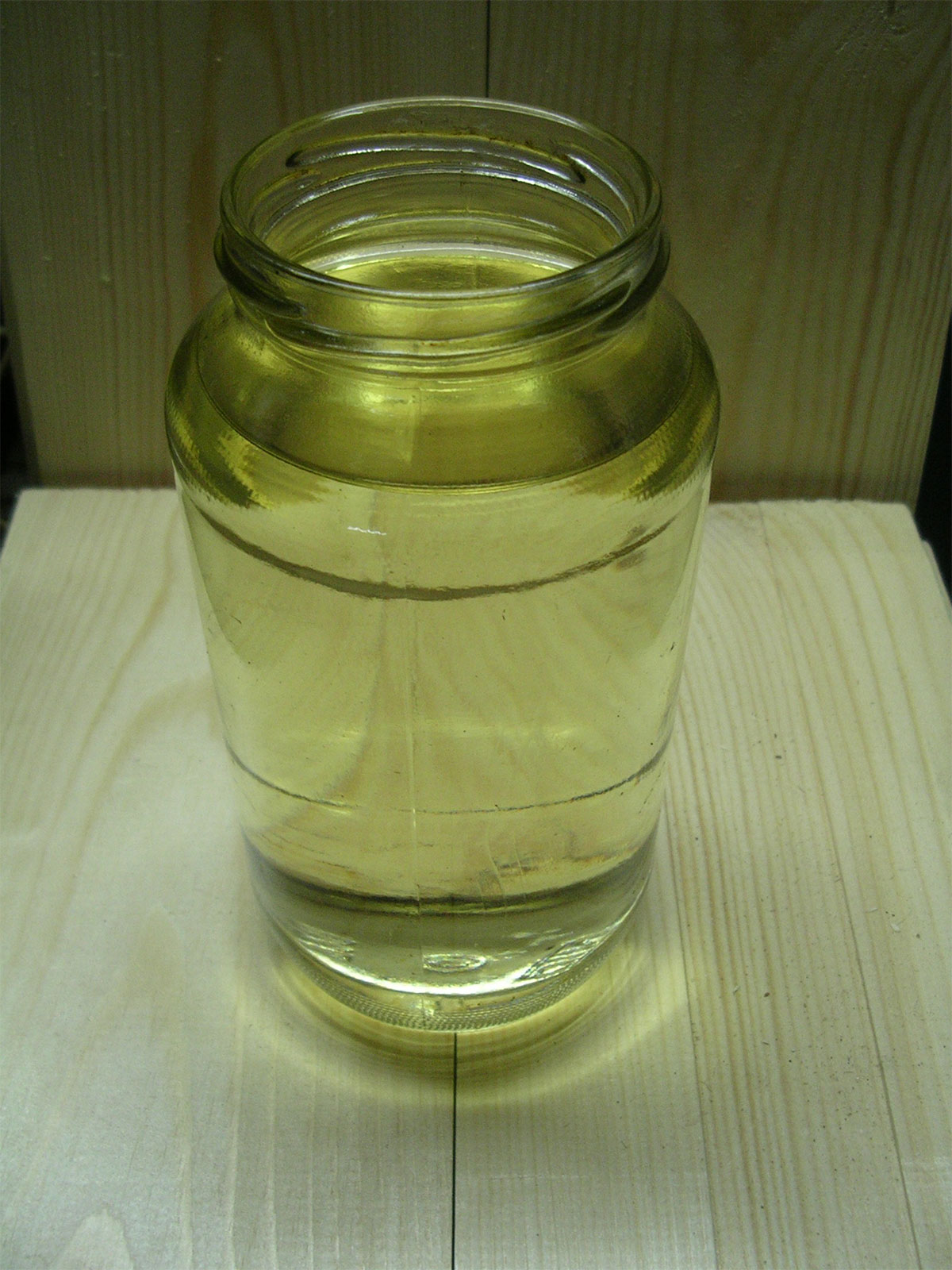
Water always settles at the bottom because it is denser than diesel. That bottom water can trigger rust, microbes, clogged filters, and injector damage if it gets pulled into the system. Use simple checks like a clear jar sample and bottom sampling to confirm what is happening before it becomes a repair bill.
Is Diesel Lighter Than Water?
The answer to “Is diesel lighter than water?” is generally yes for standard diesel fuel. This is explained by buoyancy. A less dense liquid floats on top of a more dense liquid. Since diesel has a lower density than water, it floats while water sinks. This density difference causes separation in tanks, resulting in a water layer at the bottom with diesel floating above it. Water can still enter fuel lines during tank sloshing or when fuel levels are low.
Why Diesel Filtration And Water Separating Filters Matter
Density explains why water and diesel separate. Water is denser than diesel, meaning it has more mass for the same volume. This difference causes water to settle at the bottom while diesel remains on top. This simple principle is crucial for fuel contamination control. Density, not total weight, is the key factor in managing contamination. In any size tank, water always settles to the bottom where pickup tubes, drains, and water separators are positioned to remove it.
Water contamination poses several risks. These include steel tank corrosion, microbial growth at the fuel water interface, and poor combustion quality if water reaches the injection system. This shows why water sinks in diesel is a practical problem, not merely a scientific curiosity. Effective protection requires good storage practices and reliable filtration. Water separating filters are essential for capturing and draining settled or droplet-formed water. Investing in high-quality water separating filters or professional filtration services is a practical decision that minimizes downtime, protects injectors, and ensures stable fuel quality.
Water Density Explained
Water is the standard benchmark for density comparisons because its density is stable and well known. At standard conditions, water density is approximately one gram per millilitre, which equals one kilogram per litre. This simple figure makes water an easy reference for comparing other liquids.
When comparing fluids, water is often heavier than fuels, oils, and solvents. Water’s relatively high density causes it to sink beneath most of these liquids. Therefore, water contamination in fuel storage tanks is easily separated by gravity. This separation requires sufficient settling time and correct drain points. Although temperature affects water density, the change is small in normal storage ranges. Hotter water is only slightly less dense than colder water, but it remains denser than diesel under typical conditions.
Need A Better Way To Separate Water From Diesel?
Settling and draining help, but droplets can still travel through your lines. Water separating filters and multi-stage filtration are built to capture and drain water before it reaches pumps and injectors. Explore the right filter approach for your tank size, usage, and contamination risk.
Does Diesel Float On Water?
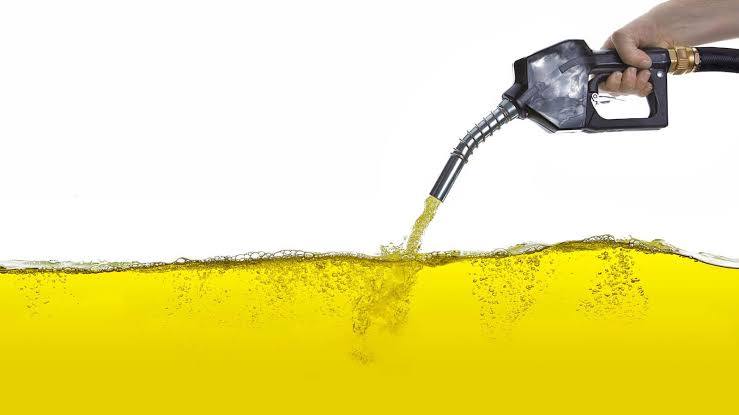
Yes, does diesel float on water is the usual observation. Diesel and water do not mix because diesel is non-polar and water is polar. Instead of blending, they separate into distinct layers. Diesel will rise to form the top layer, and water will settle to the bottom. This separation is often visible as a clear line after a short settling time. Sometimes, diesel may appear cloudy due to tiny, suspended water droplets, which will eventually settle out. This floating behavior contributes to contamination risk. Water collects at the bottom, promoting corrosion and microbial growth. It can also be pulled into the fuel system, especially when the tank is low or on rough roads.
Does Water Sink In Diesel?
Yes, does water sink in diesel is the expected physical law. Water, which is denser than diesel, settles at the bottom of tanks, a layer often called bottom water. This water causes rust, sludge formation, and clogged filters. Furthermore, water reaching injectors can cause poor fuel atomization, misfires, corrosion, and loss of lubrication in precision components.
Does Water Sit On Top Or Below Diesel?
Water is denser than diesel, so it always settles beneath the fuel. When people ask does water floats on diesel, the answer is no under normal circumstances. Water forms the lower layer, while diesel remains on top. In a fuel tank, the top layer may look like pure fuel. However, water can still collect at the bottom. Therefore, checking a water separator bowl or sampling from the bottom is a more reliable method than simply inspecting the fuel’s color at the surface.
What Happens When Both Are Poured Together?
When diesel and water are mixed, they separate immediately due to gravity. The boundary line between the liquids forms quickly, and the layers become distinct if undisturbed. Movement, such as pumping or vibration, can temporarily disperse water into the diesel as tiny droplets. This can make the fuel look hazy and can overload filters. After resting, the droplets usually settle again, forming a water layer at the bottom.
How Much Does Diesel Weigh Per Gallon?
Diesel fuel typically weighs between 6.8lbs and 7.2lbs per United States gallon. This weight varies based on the fuel’s temperature and its exact chemical composition. People commonly search for this information using various phrases. Some examples include diesel fuel weight per gallon and weight per gallon of diesel. Other frequent searches are diesel gallon weight or how heavy is diesel per gallon.
For those estimating cargo loads, related searches like how much does diesel weigh per gallon and weight of diesel fuel per gallon are common. Direct questions such as what is the weight of diesel fuel or gallon of diesel fuel weight also occur. Due to variations in phrasing, users also ask how much 1 gallon of diesel weighs, how much a gallon of diesel weighs, and 1 gallon of diesel weighs. Finally, people search for what is the weight of diesel per gallon or the weight of diesel per gallon. Warmer diesel expands, becoming less dense, so the weight per gallon slightly decreases. Colder diesel contracts, becoming denser, which slightly increases the weight per gallon. Fuel blends, including differing sulfur and bio content levels, also influence the precise density.

How Heavy Is Diesel Fuel?
Diesel fuel is heavy enough to significantly impact transport and storage logistics. People asking how heavy is diesel fuel are usually seeking practical handling information. Common searches like what is the weight of diesel, weight of diesel, and how heavy is diesel, along with diesel weight, all aim to estimate this mass. Even the misspelling weight of deisel seeks the same estimation. While diesel is less dense than water, meaning it floats, its total weight of diesel in bulk becomes a substantial load. A small container is manageable, but a full drum or truck tank quickly adds up to thousands of pounds. Total weight depends entirely on volume, while density explains the floating behavior.
How Much Does Forty Gallons Of Diesel Weigh?
To estimate bulk weight, multiply the gallons by an average diesel weight per gallon. A planning value of about 7lbs per gallon is reasonable. Using this value, how much does 40 gallons of diesel weigh, approximately 280lb. The weight range is roughly 272 to 288 pounds, depending on density. People often also ask how much 10 gallons of diesel weigh. Using the 7lbs per gallon value, the weight is about 70 pounds, with a rough range of 68 to 72lbs. Bulk volume also increases contamination risk. Larger tanks require more frequent checks, bottom draining, and water separation because condensation and water can settle over time.
Planning Fuel Loads And Storage Weight Accurately?
Diesel weight per gallon changes with temperature and blend, and that matters for transport limits and safe handling. Get a practical estimate using typical pounds per gallon ranges, plus a quick way to calculate larger volumes like drums and bulk tanks for planning and compliance.
Diesel Density In Pounds Per Gallon
For handling and planning purposes, diesel density is often expressed in pounds per gallon. Queries like diesel density lb gal and diesel fuel density lb/gal seek this value. Diesel typically ranges from the high six to low seven pounds per United States gallon, depending on conditions. Density explains why water, being denser, is heavier than the same volume of diesel. Because diesel is less dense, it floats, which is why water collects at the bottom and requires separators installed at low points.
Here is a simple table that virtually links density and weight.
| Liquid | Typical weight per United States gallon | Typical behavior when combined |
|---|---|---|
| Water | About 8.34 pounds | Sinks below diesel |
| Diesel fuel | About 6.8 to 7.2 pounds | Floats above water |
The weight of diesel fuel per U.S. gallon is requested in several common phrases. These include diesel fuel pounds per gallon, diesel fuel lbs per gallon, and pounds per gallon of diesel fuel. For general planning purposes, use approximately 7lbs per gallon. For increased accuracy, particularly for billing or engineering applications, utilize the supplier’s density data and apply corrections for temperature to the measured volume.
Can You Remove Water From Diesel Fuel?
Water can be removed from diesel, but the best method depends on whether the contamination is free water that has settled or emulsified water dispersed as small droplets. Mechanical removal begins with settling and draining. Since water is denser, it collects at the bottom of the tank and can be safely removed using drain points. Water separators then capture any remaining droplets as the fuel flows through. Filtration methods utilize water separating filter elements. These elements cause small droplets to coalesce into larger ones, so they fall out of the fuel. Multi-stage filtration can also be used, where a pre-filter removes large debris and a finer element removes smaller particles and water.
For severe contamination, such as stored fuel or tanks with sludge, microbial growth, or repeated filter plugging, professional filtration and fuel polishing may be necessary. Early water removal prevents corrosion and protects pumps and injectors.
How To Tell If Diesel Has Water In It?
Water in diesel can show up visually, through performance changes, or through testing. Use more than one clue, because water can be hidden at the bottom while fuel looks normal at the top. Look for the following clues;
- Look for haze or cloudiness in a clear sample jar after the fuel rests
- Check for a distinct bottom layer in a sample taken from the lowest point
- Inspect the water separator bowl if your system has one
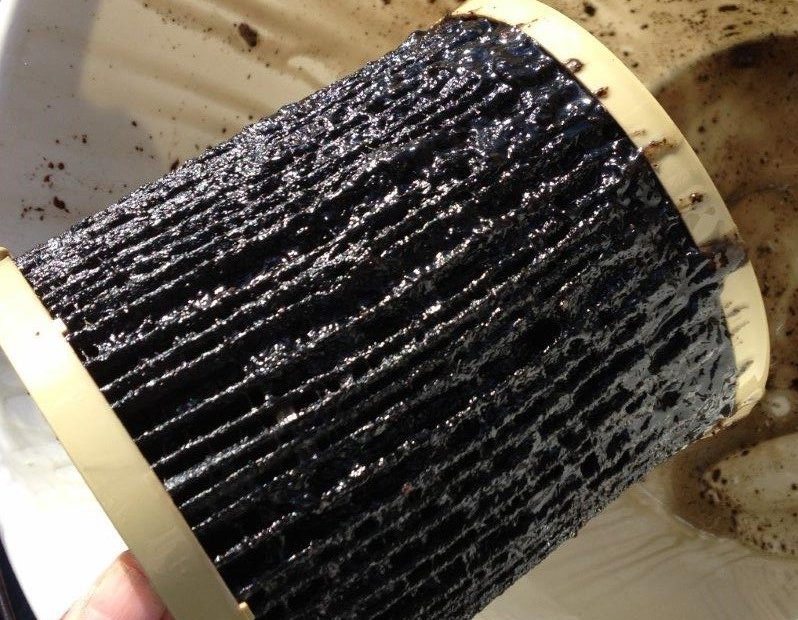
- Watch for frequent filter plugging or rapid filter darkening
- Notice hard starts, rough idle, or loss of power after refuelling
- Look for corrosion signs near tank drains or in filter housings
Field testing methods for water include water finding paste on a tank stick, bottom sampling valves, and simple jar tests. Handheld water detection tools are also common. If significant water is suspected, drain the bottom water, replace saturated filters, and identify the entry source, such as bad caps, delivery contamination, or storage condensation.