Need Emergency Fuel Delivery?
  info@elanfuels.com
Key Takeaways
- Where do planes store fuel depends on wings, center tanks, and sometimes extra tanks.
- Is fuel stored in the wings of aircraft? It’s usually true for most modern airliners.
- plane fuel tanks are managed as a system to keep balance and feed engines.
- How much gas a plane can hold varies widely by aircraft size and route length.
- Where do planes dump fuel applies to some aircraft and specific emergency cases.
Table of Contents
Where Is Fuel Stored in a Plane?
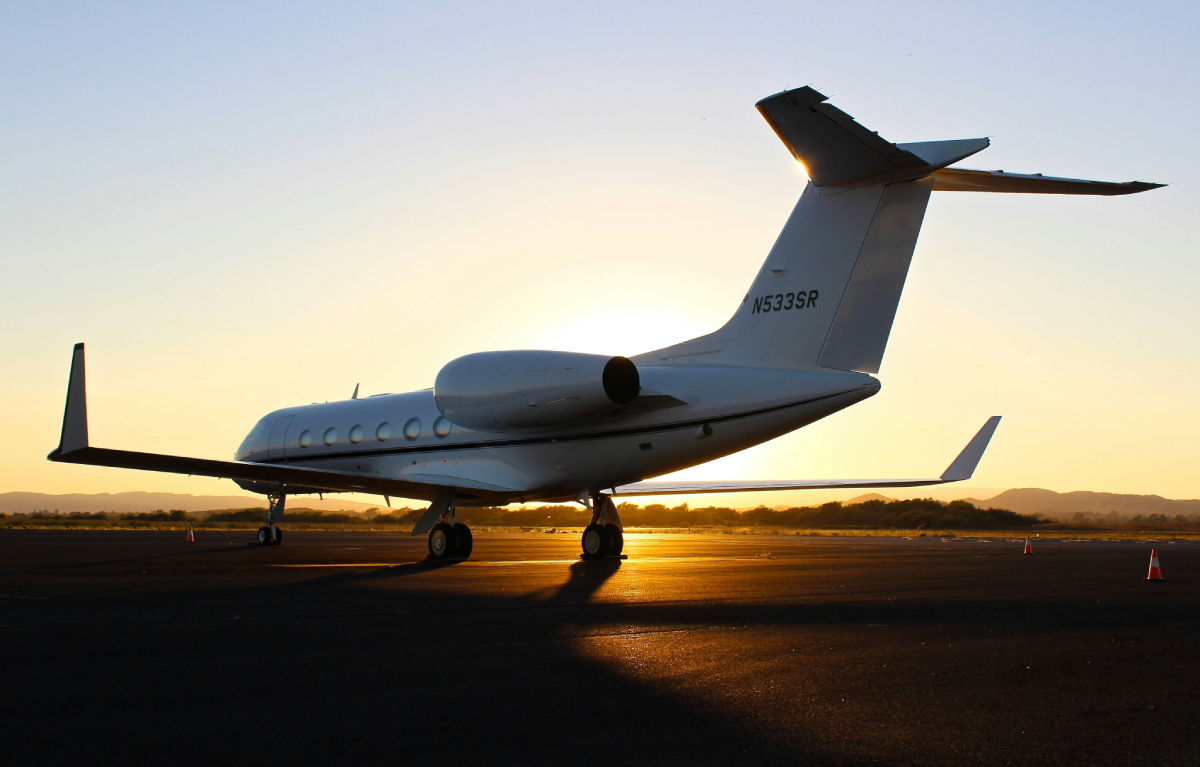
Planes do not rely on a single fuel container. They employ a sophisticated network of tanks integral to the aircraft’s structure. When people ask where is the fuel tank on a plane, the accurate answer is that there are typically multiple tanks, not just one. Most airliners primarily store fuel in the wings, often supplemented by an additional center tank located in the fuselage or wing body area. This distribution helps optimize balance, reduces structural loads, and allows operators to carry a greater volume of fuel.
Fuel tank placement is highly dependent on the aircraft’s design. Small training aircraft may feature simpler tanks in the wings or the fuselage. Commercial jets almost always have wing tanks and frequently include a center tank. The common misconception of a single, visible airplane gas tank is inaccurate. In reality, where is airplane fuel stored is commonly within sealed sections of the wing structure or in specialized tanks fully integrated into the airframe.
How Does Aircraft Fuel Storage Work as a System?
Aircraft fuel storage is an integrated system incorporating tanks, pumps, valves, sensors, fuel lines, and control logic. This system is crucial for delivering fuel to the engines and maintaining the aircraft’s center of gravity and balance. Fuel is continuously stored, measured, and moved to meet engine demand. The system monitors quantity and temperature, and it can automatically or with crew input transfer fuel between tanks to uphold center of gravity limits.
When people ask where does fuel go in a plane, the practical and technical answer is that it flows from the tanks, through pumps and lines, to the engine fuel control, and then into the combustor as part of normal engine operation. The entire process is controlled and monitored. Fuel management also includes correcting lateral imbalance, which occurs if one wing tank depletes faster than the other. The system can resolve this by transferring fuel or by adjusting the engine feed source.
If you need a reliable supply for operations, you can buy high-quality jet fuel from us, with strong quality control and consistent delivery standards.
Need Reliable Jet Fuel Delivery For Your Operations?
If knowing where fuel is stored in a plane made you think about supply reliability, we can help. Get consistent jet fuel delivery with strong quality control for aviation operations and ground support needs.
What Types of Aircraft Fuel Tanks Are Used?
Auxiliary tanks are extra tanks approved for locations like the fuselage or cargo area, providing increased range for ferry flights or extended missions. The variety of tank types allows designers to balance structure, space, safety, and cost while meeting diverse payload and range goals.
Is Fuel Stored in the Wings of an Aircraft?
For the majority of commercial airliners, is fuel stored in the wings of aircraft is confirmed as the correct practice. The wings serve as the main storage location because their strong structure offers ample space. Utilizing the wings for fuel storage avoids the need for heavy, separate tanks in the fuselage. This structural integration is beneficial as the fuel mass in the wings helps minimize bending loads during flight. It also contributes to a more stable center of gravity.
Passengers often wonder where is the fuel on a plane, perhaps assuming the body of the aircraft. In reality, where is the fuel in a plane is primarily in the wings, with many models also utilizing a center tank. When someone asks where are the fuel tanks on a plane, the accurate explanation is that most airliners feature tanks in each wing, frequently complemented by an additional center tank. The specific answer for where is fuel stored on a plane can vary by model and fuel load, but wing tanks are central.
Where Do Jumbo Jets Store Fuel for Long-Haul Flights?
Large aircraft require greater fuel capacity because they carry more passengers and cargo and fly longer routes. For these aircraft, where do planes carry fuel often includes multiple wing tanks plus additional tanks in the center body area.
Wide-body aircraft frequently utilize a large center wing box tank, commonly known as a center tank. The design may also support other tanks based on the configuration. This strategy aims to increase capacity, protect the structure, and maintain safe balance limits. Long-range flights also demand careful fuel management, often prioritising the centre tank.
Here is a simple view of typical storage areas for large transport aircraft.
| Aircraft category | Common storage areas | Typical reason |
|---|---|---|
| Narrow body jet | Wings, sometimes center tank | Efficient for short and medium routes |
| Wide body jet | Wings plus center tank | Higher capacity for long routes |
| Very large jet | Wings, center tank, additional sections | Long range and redundancy needs |
The complexity of jumbo aircraft is increased by the design and transfer logic of their jet fuel tanks. Consequently, jet fuel storage is managed as an integrated system rather than a collection of separate tanks. The capacity and management of aviation fuel storage tanks are critical factors in airline planning, directly influencing an aircraft’s effective range and payload.
Want A Clear Breakdown Of Aircraft Fuel Tanks For Your Fleet Or Training?
Confused about wing tanks, center tanks, and how the fuel system keeps balance and feeds engines? We can walk your team through the basics of aircraft fuel storage using practical, aircraft-specific examples.
Where Is the Fuel Stored in a 747?
The Boeing 747 is a classic long-range wide-body aircraft. Given its intercontinental range, a frequent question is where the 747’s fuel is stored. The fuel is strategically distributed across multiple tanks to maintain aircraft balance, respect structural load limits, and ensure system redundancy. This design supports continued safe operation even in the event of a component failure, as fuel can be rerouted through alternate paths.
Due to its size and long-range requirements, the 747 relies on a system of wing tanks and a center tank. The boeing 747 fuel tank configuration is engineered to reliably supply the four engines while preserving aircraft stability. Essentially, where is fuel stored on a 747 is across the wings and the center section. Consequently, where does a boeing 747 store its fuel is across multiple integrated tanks, with usage managed based on the flight phase and established fuel procedures.
What Are the Fuel Tank Locations on a 747?
The arrangement of the 747’s fuel tanks is a frequent topic of search for those seeking to understand the aircraft’s internal design. Although the specifics may vary by model and configuration, the fundamental structure remains constant.
- Inner wing tanks store a large share of fuel close to the fuselage for strong structure support.
- Outer wing tanks add capacity and support wing load management.
- A center tank adds extra fuel volume for long-range missions.
- Fuel can be transferred and managed to keep balance within limits.
A 747 holds its fuel in distributed tanks, and its safe operation is supported by crossfeed and transfer capabilities. In-flight procedures often mandate an operational sequence, like prioritizing the center tank or managing wing usage, to maintain balance and adhere to pump and system limits.
Where Does a Boeing 737 Store Its Fuel?
Narrow-body jets, such as the Boeing 737, are optimized for short to medium-haul flights. Their fuel system is designed for simplicity, primarily utilizing multiple wing tanks. Many models also incorporate a center tank for added capacity on longer routes or for specific operational needs.
When people ask where do airplanes store fuel on these smaller airliners, the principal answer is the wings. The specialized design of plane fuel tanks prioritizes operational efficiency, reduced weight, and easy maintenance access, reflecting the aircraft’s role in high-frequency, cost-sensitive operations.
How Much Fuel Can a Plane Hold?
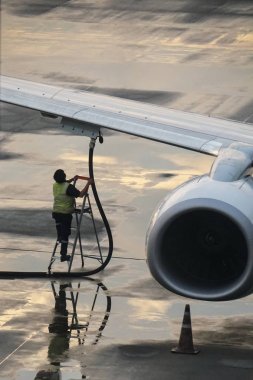
Fuel capacity varies by aircraft. How much gas a plane can hold depends on factors like tank volume, structural limitations, engine efficiency, and the aircraft’s intended mission. Even similar-looking aircraft can have different capacities due to variant changes, optional tanks, or differing maximum takeoff weight ratings. Capacity varies greatly, from a few tens of gallons in a small piston aircraft to tens of thousands of gallons in a large commercial wide-body jet.
It is important to differentiate between volume and weight when discussing fuel. Fuel is commonly measured by volume, using units like gallons or litres. However, aircraft performance planning relies on fuel weight because weight directly impacts critical factors such as lift, takeoff distance, and climb performance.
How Many Gallons Does a Commercial Plane Hold?
Many searchers ask how many gallons does a commercial plane hold. Typical ranges depend on aircraft class as follows;
- Narrow-body jets often carry several thousand gallons for common routes.
- Wide-body jets can carry far more, often tens of thousands of gallons.
- Ultra-long-range aircraft are designed around very large fuel loads and efficient engines.
- Actual uplift depends on route length, payload, alternates, and reserves.
Aircraft fuel planning is crucial and is determined by mission requirements, not solely by tank capacity. Although a tank might be full, the aircraft’s maximum takeoff weight could limit the amount of fuel it can carry. Therefore, plane fuel calculations must account for weight restrictions. Furthermore, instead of a single jet fuel tank or airplane fuel tank, aircraft utilize multiple interconnected tanks to manage their fuel supply.
What Kind of Fuel Do Airplanes Use?
Commercial jets operate on jet fuel, which is not the same as car gasoline. If someone asks what kind of fuel do airplanes use, the typical answer is Jet A or Jet A-1, which are kerosene-based fuels suitable for turbine engines. Smaller aircraft with piston engines, however, utilize aviation gasoline, or Avgas.
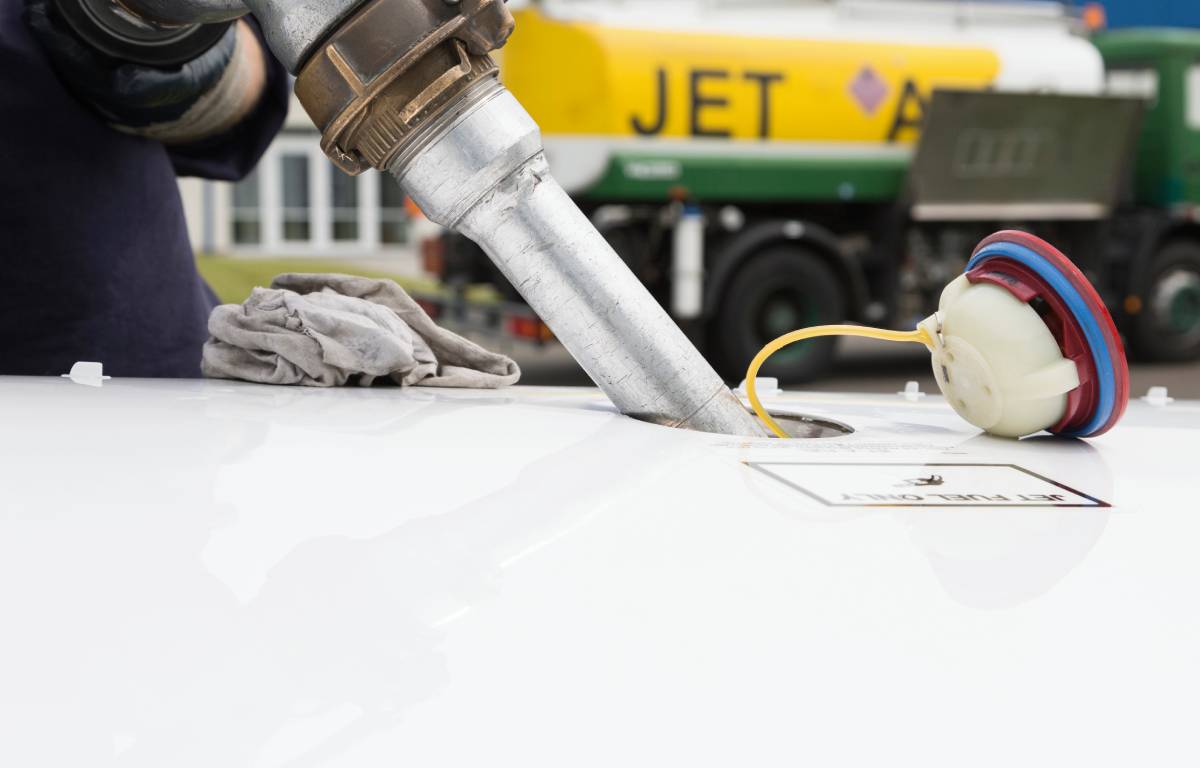
If someone asks what do airplanes use for fuel, the type depends on the engine. Turbofan and turbojet engines use jet fuel, while piston engines typically use Avgas. When people ask where jet fuel is stored, or where is jet fuel stored in a plane, it is kept in the aircraft’s tanks, usually located in the wings, and sometimes in the center or auxiliary tanks.
Planning Long Range Flights And Fuel Loads?
Get Help With The Big Picture
From wing tanks to centre tanks and fuel management, smarter planning starts with understanding capacity and procedures. Get support interpreting how much gas a plane can hold for real routes and payloads.
Where Do Planes Dump Fuel in Emergency Situations?
Fuel dumping is an emergency procedure used by some large aircraft to quickly reduce weight. This is necessary when an aircraft must land shortly after takeoff while exceeding its maximum safe landing weight, minimizing structural stress upon touchdown. Smaller or medium aircraft typically rely on holding patterns to burn off excess fuel rather than dumping it. When people ask where do planes dump fuel, the answer is that it is released through dedicated dump nozzles, usually located in the wing area. Strict procedures require coordination with air traffic control. Crews aim to avoid populated areas, and the fuel is dispersed at altitude to promote rapid breakup and evaporation.
How Is Aircraft Fuel Tank Design Engineered for Safety?
Aircraft fuel tank design prioritizes structural integrity, fire risk reduction, leak prevention, and system redundancy. Many tanks are integral, using sealed sections of the aircraft structure to save weight and maximize space. Specialized sealants, precise fastener designs, and regular inspections ensure a leak-free environment. Materials are selected for durability and compatibility with the fuel itself. Venting systems regulate pressure, and inerting systems may be used to reduce flammability risks in certain tank areas.
Redundancy is critical, with backup pumps, valves, and routing in place. Crossfeed capability allows an engine to be supplied from the opposite side if needed. Sensors and alerts provide early detection of abnormal conditions. The entire aircraft fuel tank system undergoes rigorous testing and certification to ensure it can withstand expected operational stresses, including vibration, temperature changes, and loads.
How Does Fuel Move Between Wing Tanks and Engines?
Fuel movement relies on electric boost pumps to move fuel from tanks into the feed lines. Engine-driven pumps then increase pressure for engine fuel control. Valves manage fuel distribution. Crossfeed valves connect systems, while transfer valves move fuel for balance. Automatic logic usually manages flow, but the crew has a manual override to ensure consistent flow and stable balance.