Need Emergency Fuel Delivery?
  info@elanfuels.com
Key Takeaways
- Bad fuel filter symptoms often include hard starting, hesitation, stalling, and weak acceleration.
- A clogged fuel filter can create lean running conditions and trigger warning lights.
- Many signs of a bad fuel filter become worse when the engine is under load.
- A dirty fuel filter can mimic ignition and fuel pump issues during diagnosis.
- Learning how to check fuel filter conditions can help prevent bigger repair bills.
Table of Contents
Understanding Bad Fuel Filter Symptoms
The fuel filter serves to protect the engine by trapping dirt, rust and other debris before fuel reaches sensitive components. These sensitive parts include injectors and other high-pressure parts that rely on clean fuel to work correctly. When the filter becomes restricted, fuel drops and combustion becomes unstable. That is why one of the first symptoms of a bad fuel filter is a change in drivability, which gets worse over time.
Other early symptoms of a bad fuel filter include cranking, sluggishness in response, weak acceleration and rough running. As fuel filter problems ensue, the engine may misfire or stall. If you ignore these warning signs, this can lead to added strain on the pump, poor injector performances and eventually very expensive repairs. So it’s important to be very attentive and notice engine performance as bad fuel pump symptoms usually start with daily changes in engine performance.
Not Sure If Your Fuel Filter Is Causing The Problem?
Hard starting, rough idle, hesitation, and weak acceleration can all point to a clogged fuel filter, but they can also mimic other engine issues. Get help identifying the real cause before minor drivability problems turn into costly repairs.
What Are The Most Common Signs Of A Clogged Fuel Filter?
The most common signs of a clogged fuel filter are;
- Poor acceleration
- Rough idle
- Hard stating
- Poor acceleration
These symptoms occur when the engine isn’t getting enough fuel as demand changes. The vehicle’s system may try to compensate for a lean mixture by adjusting fuel trim, but this only works within certain limits. In hot weather, cold weather, highway driving, or stop-and-go traffic, fuel clogged symptoms will show themselves more prominently. A small restriction may only reduce power under load, while a clogged fuel filter can eventually cause severe drivability issues or no-start conditions.
Why Does Your Engine Sputter Or Hesitate Under Load?
When the driver presses the accelerator, the engine needs a larger volume of fuel. If there is a dirty fuel filter or a fuel filter clog, the system may not deliver enough fuel quickly enough. That can make the engine feel slow, jerky and uneven.
This issue becomes more prominent when the vehicle is climbing, carrying multiple passengers, or towing. The engine needs the right air-to-fuel balance for smooth combustion. Symptoms of a clogged fuel filter often appear when the air-to-fuel balance is disturbed by restricted fuel flow. In more serious cases, cylinders tend to misfire because they are not getting enough fuel. That is why many of the fuel filter symptoms noticed first by car owners show up during acceleration rather than at idle.
Why Does A Bad Fuel Filter Cause Hard Starting?
A fuel filter blocked by dirt can make it harder for the fuel system to build enough pressure for ignition. That is one of the most common symptoms of fuel filters going bad in daily driving.
A car with an old fuel filter may require multiple attempts to start, especially after sitting overnight. The restriction delays proper pressure build-up, which means the engine cranks longer before firing. This puts added strain on the battery and starter motor. A weak fuel pump can also cause hard starting, but the symptoms of a bad fuel filter are usually more noticeable when towing, carrying passengers, or ascending hills. This is why it is important to properly diagnose fuel filters.
Can A Dirty Fuel Filter Cause A Rough Or Shaky Idle?
Yes. A rough idle is one of the most common dirty fuel filter symptoms and can feel like vibration through the steering wheel, seat, or floor.
- The engine may sound uneven or shaky because the fuel supply is inconsistent.
- Even when the car is not moving, pressure still needs to remain steady for clean combustion.
- Many signs of dirty fuel filter trouble look similar to worn spark plugs or vacuum leaks.
- Continued fuel filter dirty symptoms can increase stress on engine mounts and reduce long-term smoothness.
Diagnostic Trouble Codes For Fuel Restriction
Lean running codes often appear because of restricted fuel flow. P0171 indicates a lean condition on one engine bank, and P0174 suggests the same problem on the opposite bank. These fault codes do not definitively prove the filter is the sole issue. However, they strongly support fuel filter diagnosis when they occur alongside typical performance problems.
Mechanics utilise specialised scan tools to accurately check fuel trims, oxygen sensor activity and pressure data. Related system faults might include codes for fuel rail pressure or overall delivery performance. A diagnostic trouble code should direct the repair process; it must never replace it. If a car shows symptoms of fuel filter problems, clearing codes without resolving the underlying cause will only postpone the necessary repair, possibly causing more damage.
Ways To Check Your Fuel Filter For Blockages
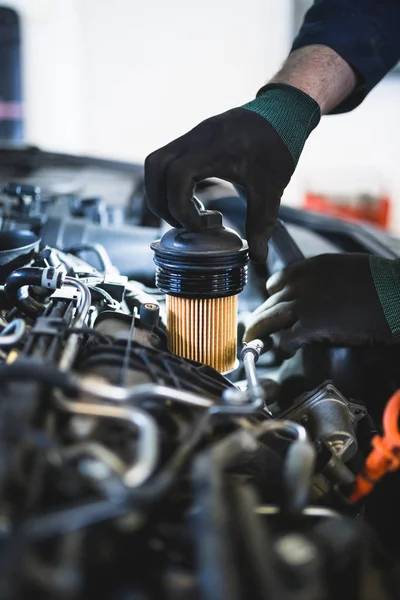
The best approach to inspect for signs fuel filter is bad varies with the vehicle design. Older external filters can sometimes be tested using a simple blow-through after safe removal. Restricted airflow suggests a partial blockage. Modern vehicles benefit more from a pressure gauge, which is a superior method for testing fuel filter conditions. Safety is paramount before any check. Relieve system pressure, avoid sparks, wear eye protection and ensure good ventilation. DIY checks can identify fuel filter clog symptoms, yet professional testing provides greater accuracy.
Schedule a professional fuel system diagnostic with our certified technicians today to ensure your vehicle runs at peak efficiency without the guesswork.
| Check method | What it shows | Best use | Main limit |
|---|---|---|---|
| Blow-through test | Basic airflow restriction | Older serviceable filters | Not precise |
| Pressure gauge test | Fuel pressure before and after the filter | Strong diagnostic method | Needs proper tools |
| Visual inspection | Housing damage or leaks | First quick check | Cannot confirm internal clogging |
| Scan data review | Fuel trims and related faults | Supports diagnosis | Indirect evidence |
A do-it-yourself fuel filter check process only suggests a restriction is possible. A professional fuel filter check includes scan data, pressure testing and component evaluation. This separates faulty fuel filter symptoms from other problems.
Seeing Early Signs Of A Clogged Fuel Filter?
A restricted fuel filter can quietly reduce performance, trigger lean conditions, and put extra strain on your fuel pump and injectors. Learn what to check next and when it’s time to test or replace the filter before the problem gets worse.
How To Spot A Faulty Fuel Pump Or Filter
Use this step-by-step process to compare a faulty fuel filter with pump failure.
- Turn the key to the on position and listen for the pump prime. No sound may suggest a pump or electrical trouble.
- Connect a pressure gauge and compare readings to the vehicle specification.
- Check the pressure before and after the filter if possible. A drop across the filter supports signs of a failing fuel filter.
- Watch whether the pressure loss is constant or intermittent. Fuel filter clogged signs are often steady, while a pump may fail on and off.
- Test the voltage and ground at the pump. Correct the electrical supply with weak output points more toward the pump.
This method helps distinguish bad fuel pump filter symptoms from true filter restriction. A clogged filter blocks flow mechanically. A weak pump struggles to generate pressure in the first place.
What Are The Common Causes Of A Clogged Fuel Filter?
Several common issues explain what causes a clogged fuel filter. Gasoline contaminated with small particles from poor-quality sources can slowly fill the filter media. A rusting metal fuel tank may also release debris into the fuel stream over time. Allowing the fuel level to become very low can pull settled contamination where dirt collects.
Another significant issue is old fuel. Aging fuel breaks down and forms sticky deposits that clog the filter material. These conditions explain many effects of a bad fuel filter and why old fuel filter symptoms worsen gradually, then suddenly. Regular maintenance and clean fuel reduce the risk of repeated fuel filter clogging.
Want To Fix Bad Fuel Filter Symptoms Fast?
From sputtering under load to hard starts and shaky idling, fuel filter issues can escalate quickly if ignored. Find out how to inspect, test, and address fuel delivery problems before they lead to breakdowns or expensive component damage.
What Are The Signs Of A Frozen Fuel Filter?
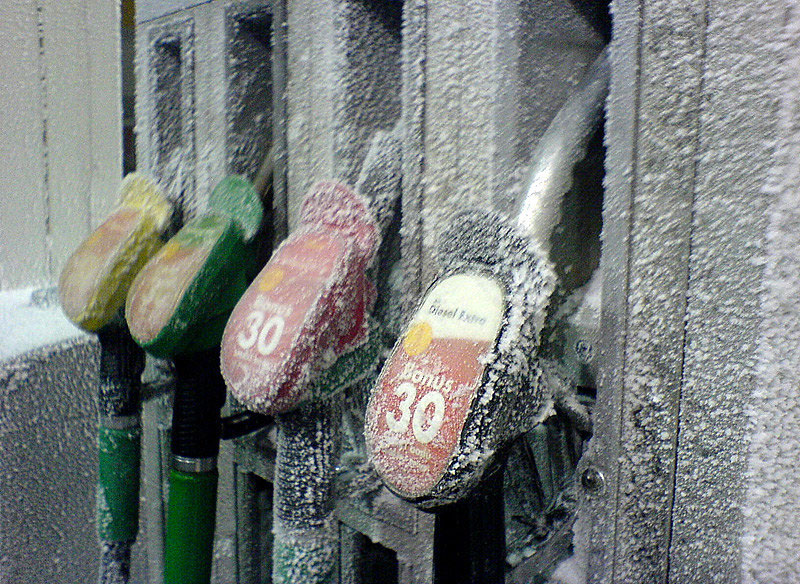
Ice in the filter can restrict fuel flow similarly to dirt or debris. These frozen fuel filter symptoms usually occur in very cold weather when moisture within the filter freezes.
Diesel vehicles face extra risk because low temperatures also cause waxing and gelling. Hard starting, a no-start situation, sudden power loss, or stalling may result during winter driving. Some clogged fuel system symptoms that mimic contamination are actually cold-weather issues. If stopped up fuel filter symptoms only happen when it is freezing, you should focus on moisture control and winter fuel treatment. Using the correct additives and eliminating water prevents recurrence.
Are your symptoms mainly about engine performance or about a fuel smell/leak?
Have the symptoms become more noticeable under load, like climbing, towing, or accelerating?
Solution:
Your symptoms strongly match restricted fuel flow from a clogged fuel filter. Start with a fuel system diagnostic that includes fuel pressure testing, scan data review, and filter inspection so you can confirm whether the filter is restricting flow before it strains the pump or injectors.
Solution:
Your symptoms could still point to a dirty fuel filter, but they may also overlap with spark plug, vacuum leak, or fuel pump issues. Check service history, inspect the filter if accessible, and use pressure testing or scan data to separate fuel filter problems from other drivability faults.
Have the symptoms become more noticeable under load, like climbing, towing, or accelerating?
Solution:
A blocked filter may be creating pressure stress that is worsening a leak while also reducing performance under load. Stop driving until the system is inspected, because fuel leaks near the engine bay or tank area can become dangerous quickly and need prompt repair.
Solution:
A fuel smell or visible leak should be treated as the priority, even if drivability symptoms are mild. Inspect the filter housing, seals, and nearby lines immediately, avoid driving until the leak source is confirmed, and repair the fault before it turns into a fire risk or a larger fuel system failure.
Can A Leaking Fuel Filter Cause A Strong Smell Of Gasoline?
Pressure buildup against a blocked fuel filter can severely stress the housing or seals, eventually causing a leak. Consequently, leaking fuel filter symptoms may include a strong gasoline odor, wetness around the filter or difficulty starting the engine. A fuel leak in the engine bay or near the tank is dangerous because fuel can ignite on hot components. This also reduces fuel economy and poses an environmental risk. Initially, fuel filter failure symptoms might manifest as performance issues, then quickly become urgent when fuel escapes. Even minor symptoms of bad fuel filters or weak power warrant immediate repair of a leaking filter.